The almadraba in Tarifa: living history of bluefin tuna in the Strait of Gibraltar
There are words that not only name a tradition, but a whole way of understanding a place. Almadraba is one of them. In Tarifa, to talk about almadraba is not only to talk about fishing: it is to talk about sea, memory, culture, landscape and a millenary relationship between human beings and the passage of bluefin tuna through the Strait of Gibraltar.
The almadraba is part of the identity of the coast of Cádiz, but in Tarifa it acquires a special meaning. Here, between the Atlantic and the Mediterranean, the passage of tuna is not an abstract idea or a scene from the past: it is a real event that has marked the local history for centuries and continues to leave its mark on the gastronomy, in the collective imagination and in the way the sea is experienced.
What exactly is the almadraba?
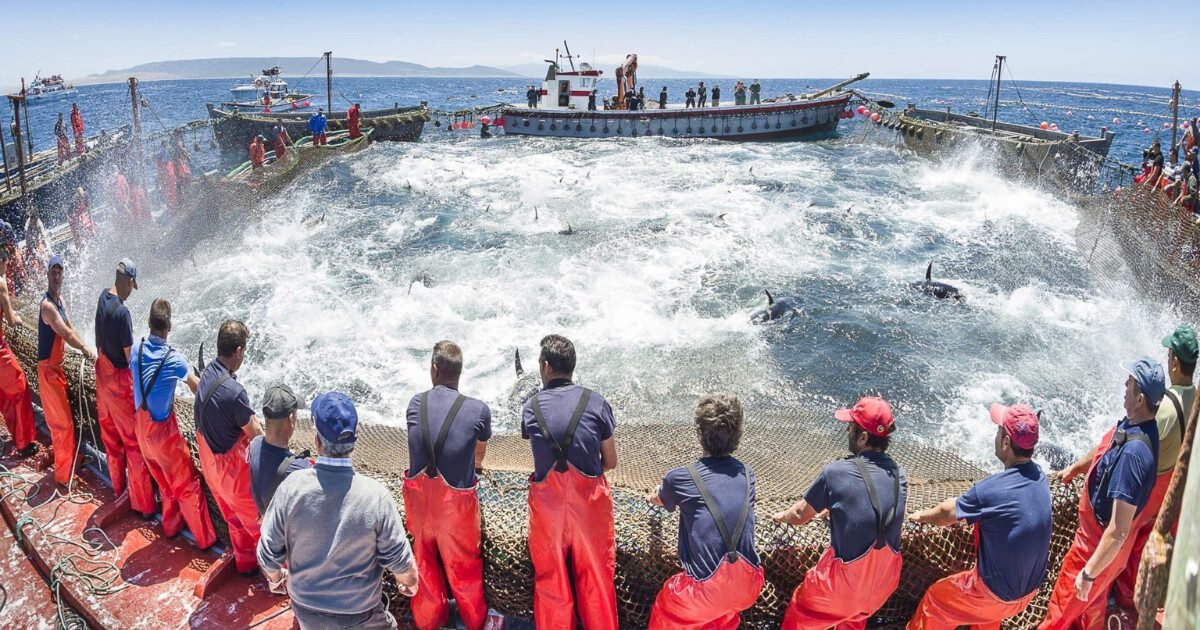
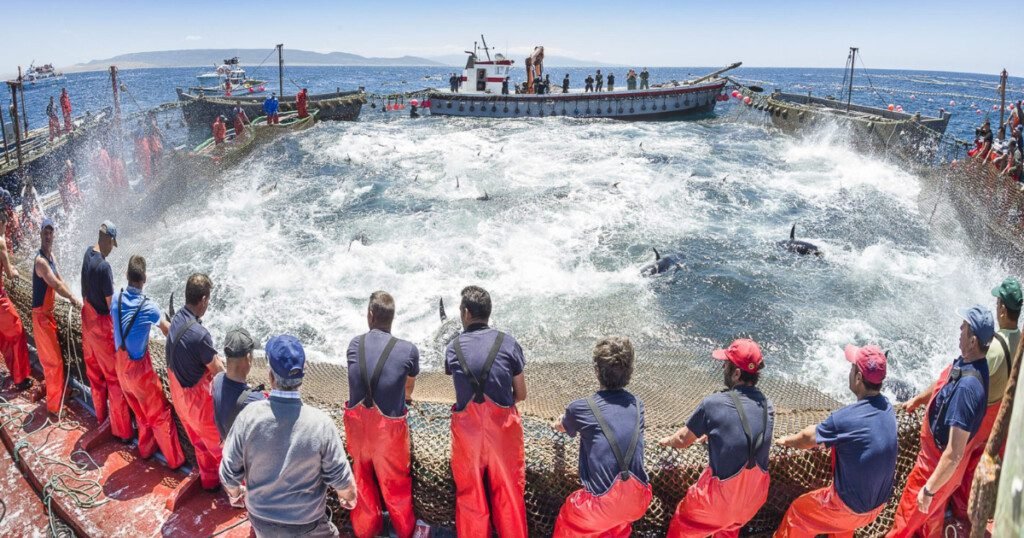
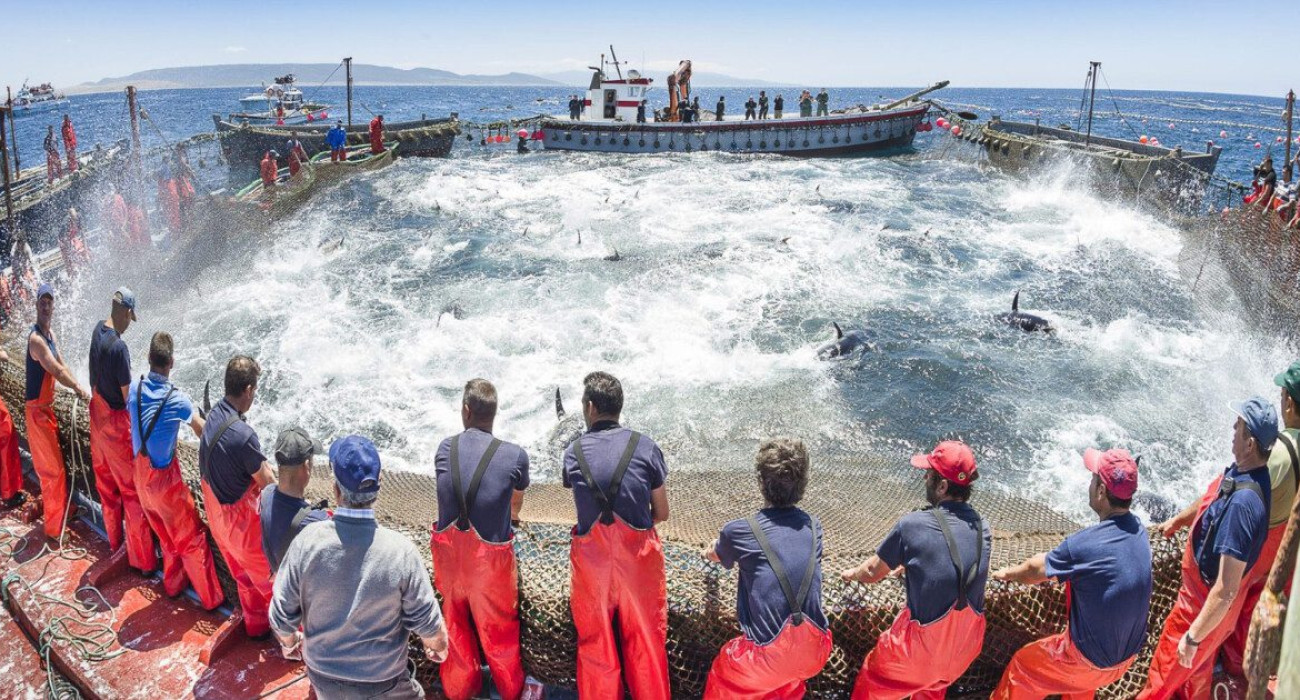
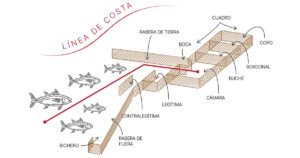
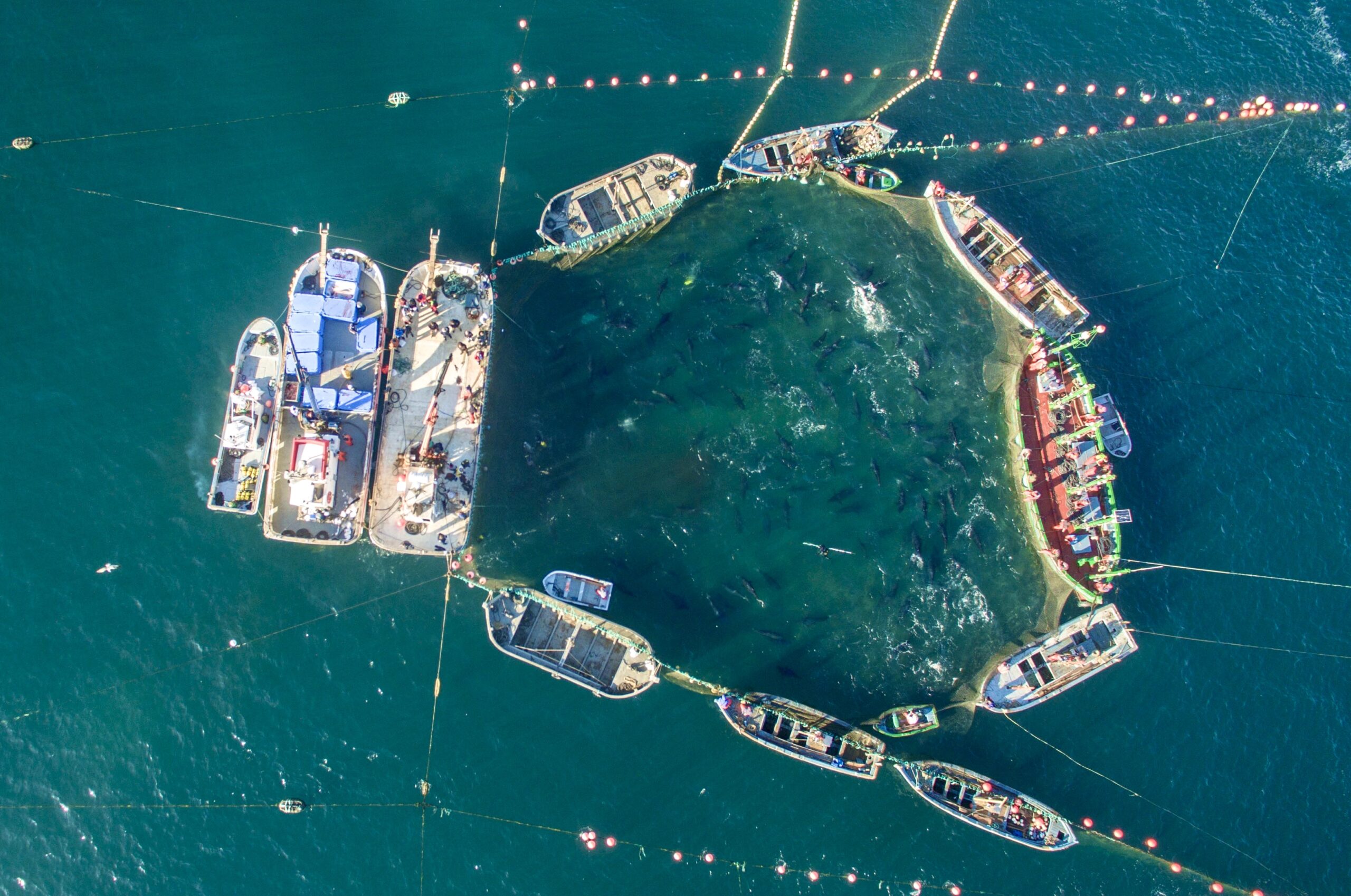
The Real Academia Española defines the almadraba as a trap, net, fixed and bottom-set gear, It consists of nets, cables and ropes that are placed in areas where schools of fish pass through in order to lead the fish to a dead-end enclosure from which they are extracted. In other words, it is a traditional technique designed to take advantage of the natural path of bluefin tuna during their migration.
The word itself tells us part of its history. “Almadraba” comes from the Hispanic Arabic "Almadraba". almaḍrába, which means “place where one hits or fights”. This linguistic origin is no coincidence: it perfectly summarizes the intensity of a practice that combines knowledge of the sea, craft, strategy and an enormous cultural heritage.
The origin of the almadraba: a history of thousands of years
The history of the traps in the Strait of Gibraltar is very ancient. The Junta de Andalucía explains that this system of nets has been used on both shores of the Strait by Phoenicians, Romans, Arabs and Christians to the present day. We are not, therefore, before a gastronomic fashion or a recent custom: we are before one of the oldest and most persistent fishing traditions in southern Europe.
Moreover, the link between tuna and these coasts goes back thousands of years. The official tourist guide of Tarifa states that tuna has been fished off its coasts for three thousand years, This is an extraordinary historical continuity that makes this territory one of the great stages of tuna culture in Andalusia.
Tarifa and the almadraba: an inseparable relationship
If the almadraba makes sense in any place, that place is the Strait of Gibraltar. Tarifa occupies a unique position between two seas, in a natural corridor through which bluefin tuna migrate on their way to the Mediterranean. Tarifa's official tourist guide underlines precisely this strategic role: these animals migrate through the Strait of Tarifa in the obligatory passage between our two seas., and in addition two of the four tuna traps in the province are set in the waters off the coast of Tarifa.
That means that Tarifa does not appear in the history of the almadraba as a simple beautiful scenery by the sea. Tarifa is one of its essential pieces. Its geography explains the tradition; its coast makes it possible; and its identity has kept it alive generation after generation.
Baelo Claudia: when the tuna raised a city
There is little evidence as convincing as Baelo Claudia. In the cove of Bolonia, within the municipality of Tarifa, is located this exceptional Roman site whose wealth was closely linked to the sea. The official website of Tarifa Tourism recalls a quote by Strabo from the year 18 A.D. in which Baelo is described as “an emporium that has salted fish factories”.”, He adds that the fishing industry, especially the tuna industry, was their main economic source.
The same source explains that at Baelo Claudia there are several cetariae, The factories of salted fish and garum next to the beach, that is, salted fish and garum factories next to the beach, and he states something very revealing: that industry was the reason for the existence of the city.. In other words, tuna not only fed the population or generated trade; it helped to build a city, an economy and a connection with other Mediterranean territories.
💡 Discover the ruins of Baelo Claudia, on the famous beach of Bolonia. 👈🏽
Much more than fishing: culture, economy and memory
The almadraba cannot be understood only as a technique. In Tarifa it is also part of a way of life linked to the port, the fish market, the trades of the sea and a gastronomic culture that has managed to transform the bluefin tuna in culinary heritage. The urban route of the municipality itself reminds us that Tarifa has traditionally been a fishing town and that bluefin tuna is still caught in season using the almadraba technique.
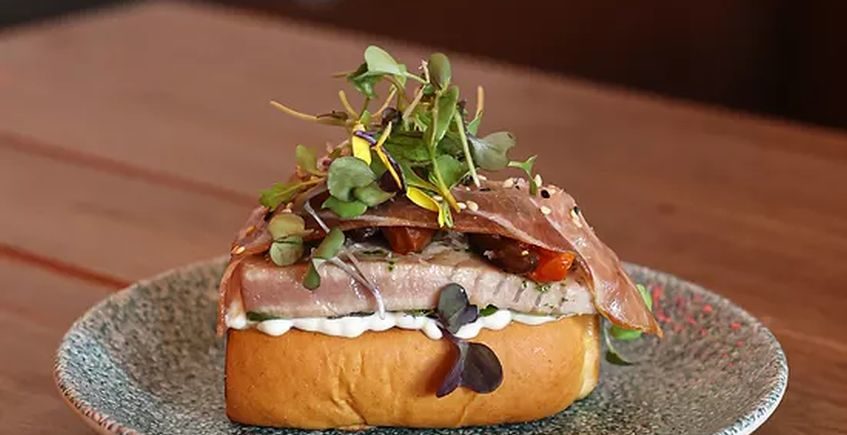
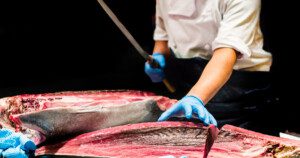
To this historical continuity is added its contemporary dimension. The Tuna Gastronomic Route, held in Tarifa since 2013, takes place every year during the time of catch by traps, between late May and early June, and works as a way to bring this tradition to visitors and locals from the kitchen, dissemination and collective celebration. During these days, the city pays tribute to one of its most emblematic products with tapas, dishes and parallel activities, among which the following have been highlighted on different occasions the ronqueo at the Mercado Central de Abastos, a demonstration as didactic as fascinating that connects the visitor with the most authentic seafaring tradition of the Strait.
💡 Discover here the 10 best restaurants in Tarifa 👈🏽
When is the almadraba season in Tarifa?
It is no coincidence that this fishery takes place in spring. The almadraba season is normally concentrated in the spring. between April and June, This is the moment when the bluefin tuna crosses the Strait of Gibraltar towards the Mediterranean Sea to reproduce. Tarifa, due to its privileged position between two seas, is located precisely in this natural corridor of passage, hence the almadraba has played such an important role here for centuries. To understand these dates is also to understand the logic of this tradition: it does not respond to chance, but to the ancient knowledge of the migratory cycles of the tuna and its arrival in warmer Mediterranean waters for spawning.
Why the almadraba continues to fascinate today
The almadraba fascinates because it unites many layers at the same time. It is landscape, because it can only be understood in a place as unique as the Strait. It is history, because it crosses entire civilizations. It is language, because even its name preserves the echo of the Andalusian world. And it is emotion, because it continues to connect Tarifa with a sea ritual that every spring returns to the coast a scene repeated for centuries.
In a destination so well known for its wind, beaches and nature, the almadraba brings something even more valuable: depth. It reminds the traveler that Tarifa is not only visited, but also interpreted. That behind its spectacular scenery there is an ancient, powerful and authentic history. And that to understand the almadraba is to better understand what Tarifa has been, what it still is and why this corner of the south has a personality so difficult to imitate.
In short...
Talking about almadraba is talking about a millenary tradition, yes, but in Tarifa it is also talking about a territory that has lived looking at the sea, reading its cycles and turning the passage of tuna into history, sustenance and culture. From the antiquity of Baelo Claudia to the current Tarifa that celebrates each tuna season, the almadraba is still one of the great stories of the Strait.
And perhaps therein lies its true strength: that it does not belong only to the past. The almadraba continues to tell who we are, where we come from and why Tarifa occupies such a special place in the emotional, historical and gastronomic map of the south.
What is the almadraba?
The almadraba is a traditional tuna fishing gear based on a fixed system of nets placed in areas where schools of fish pass through to lead them to an enclosure from which the catch is made.
What is the origin of the almadraba?
Its use in the Strait of Gibraltar is associated with a millenary tradition that has passed through Phoenicians, Romans, Arabs and Christians, and its name comes from Hispanic Arabic.
What is the relationship between Tarifa and the almadraba?
Tarifa occupies a key position in the Strait, natural passage of bluefin tuna between the Atlantic and the Mediterranean, and in its waters two of the four traps of the province of Cadiz are set.
What role did Baelo Claudia play in this story?
Baelo Claudia, in Bologna, was a Roman city whose economy was deeply linked to the tuna, salted fish and garum industries.